
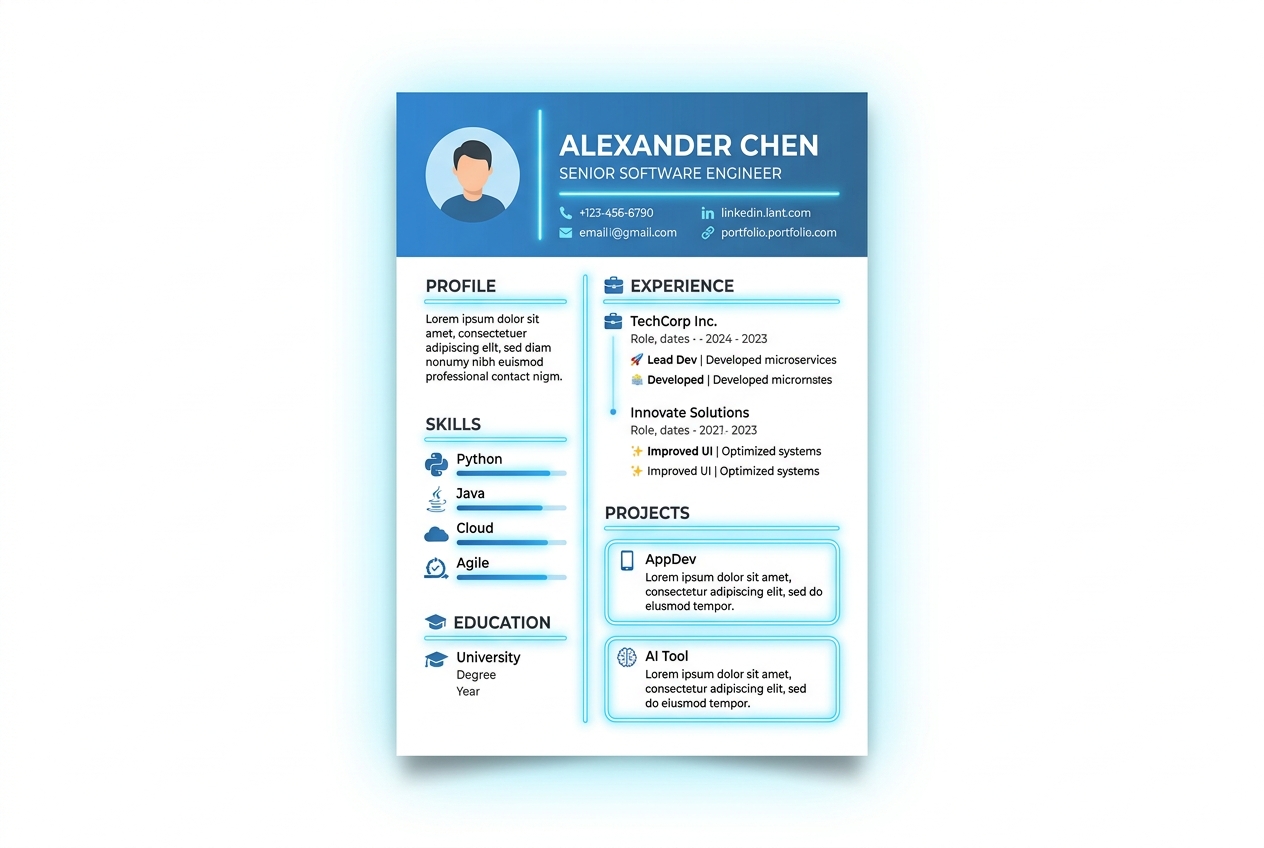
Designing an RPA Resume That Wins Interviews
In 2026, the demand for Robotic Process Automation (RPA) developers remains high, but the competition is fiercer. Companies are no longer looking for developers who just build simple click-and-type bots. They want automation engineers who understand business processes, data structures, and how to build resilient, self-healing automations.
If you are transitioning from a non-IT background or are a fresher entering the tech market, your resume is your first (and often only) chance to make a lasting impression. Here is how to build a winning RPA developer resume.
1. Ditch Generic Objective Statements
Traditional objectives like "Seeking a challenging position as an RPA Developer to utilize my skills..." are outdated. Replace them with a high-impact Professional Summary that immediately conveys your value proposition.
- Before (Generic): "Motivated software developer looking to get a job in RPA using UiPath."
- After (Impactful): "RPA Automation Engineer with hands-on experience designing and deploying end-to-end bots using UiPath and Power Automate. Proven record of automating invoice data extraction and legacy system syncing, reducing manual processing times by 70%."
2. Emphasize Technical Competencies
Organize your skills section so it is easy for recruiters and Automated Tracking Systems (ATS) to read. Group your competencies into clear categories:
- RPA & Automation Tools: UiPath Studio, UiPath Orchestrator, Power Automate Desktop, Power Automate Cloud.
- Languages & Scripting: Python, SQL, PowerShell, HTML/CSS.
- Integrations & APIs: REST APIs, JSON, XML, OCR engines (UiPath Document Understanding, Microsoft OCR).
- Database & BI: SQL Server, Power BI, Excel Advanced.
- Methodologies: SDLC, Agile/Scrum, PDD (Process Design Document) creation.
3. Translate Non-IT Experience Into Automation Context
If you are switching careers (e.g., from operations, finance, or customer service), do not hide your background. Translate it. Show that you understand the pain points of manual tasks because you lived them, and highlight any automation mindset you applied.
For example, if you worked as a finance analyst:
"Managed monthly reconciliation of 500+ invoices across legacy ERP systems. Identified bottleneck processes and mapped out workflows to prepare for RPA implementation, collaborating with technical teams to define business rules."
4. Showcase Hands-on Projects
If you lack formal corporate IT experience, your projects section is your lifesaver. Give each project a clear title, state the tools used, and describe the action and result:
Project: Automated Invoice Processing System (UiPath & SQL)
- Goal: Extract invoice details from incoming emails, validate data against a database, and enter them into a legacy ERP system.
- Stack: UiPath Studio, Document Understanding OCR, SQL Server.
- Outcome: Built a dispatch-performer architecture bot that processes 200+ invoices daily with 98% accuracy, cutting manual entry times by 4 hours per day.
5. Format for Scannability
Keep your resume to 1–2 pages max. Use clean typography, bold headings, and bullet points. Avoid dense blocks of text. Ensure your GitHub, LinkedIn, and portfolio link are hyperlinked at the top.