
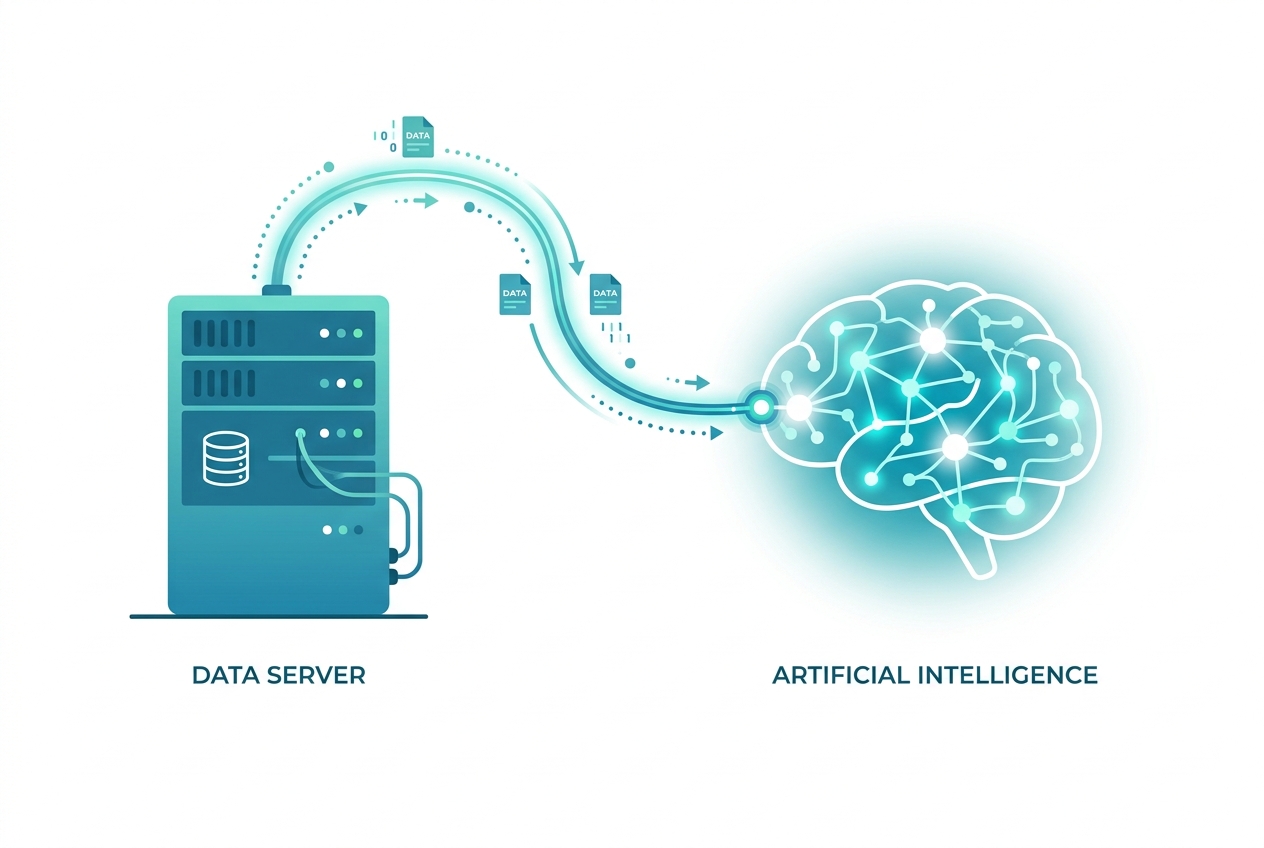
The Bridge Between Natural Language and SQL
Structured Query Language (SQL) is the foundational language of data. For decades, database administrators, data analysts, and developers have written SQL queries to extract data, build reports, and run calculations. However, writing SQL requires syntax knowledge, table schema understanding, and join optimization skills.
With the rise of Large Language Models (LLMs) and AI Agents, a new era of database querying has emerged. Instead of writing complex queries manually, users can now talk to their databases in plain English, and an AI Agent writes, runs, and validates the SQL code for them.
Here is how AI Agents are transforming database querying and engineering.
1. What is a Text-to-SQL Agent?
A Text-to-SQL agent is not just an LLM that translates text to code. It is an agentic workflow that connects to your database, inspects the schema, writes the SQL, runs the query, checks for execution errors, and fixes the query if it fails.
[User Prompt] ➔ [AI Agent] ➔ [Inspects Schema] ➔ [Writes & Runs SQL]
                      ▲                                  │
                      └──────── [Syntax Error?] ◄────────┘
                                 (Auto-correction)
If the SQL execution returns an error (e.g., a missing column or incorrect join), the agent inspects the error message, refactors the query, and retries. This self-healing ability is what makes agents far superior to simple static translation models.
2. Context-Aware Query Generation
A major challenge in automating database queries is that LLMs don't know your business terms. For example, if a user asks for "active users," does that mean users who logged in today, this week, or who paid a subscription?
To solve this, modern database agents utilize metadata dictionaries and semantic layers. When a query is made, the agent references a dictionary that maps business terms (like "active customer") to exact database logic (like status = 'active' AND last_login_date >= DATEADD(day, -30, GETDATE())).
3. Automated Business Intelligence (BI) Pipelines
AI database agents can do more than output data tables. They can:
- Synthesize Insights: Summarize why sales dropped in a specific region.
- Auto-generate Visualizations: Convert query results into dynamic chart structures that can be read directly by Power BI or Python libraries.
- Schedule Alerts: Monitor databases for anomalies (e.g., a spike in failed credit card transactions) and ping developers on Slack or WhatsApp.
4. Security and Privacy Guidelines
Connecting an AI agent to a live database raises valid security questions. Best practices for implementing database agents include:
- Read-Only Access: Never give the AI agent write or delete permissions on production databases.
- Row-Level Security: Restrict what tables the agent can access based on the user's role.
- Query Verification: Implement guardrails to prevent SQL injection or malicious inputs.
The Future of Data Analytics
AI Agents are not replacing database developers; they are amplifying them. By taking over the repetitive query drafting and report generation tasks, database professionals can focus on modeling, optimization, and advanced database architecture.